Gynecomastia Treatment at Roop Clinique
Expert Medical & Surgical Solutions for Male Breast Reduction

Personalized Treatment

Advanced Techniques

Comprehensive Care

Experienced Specialists
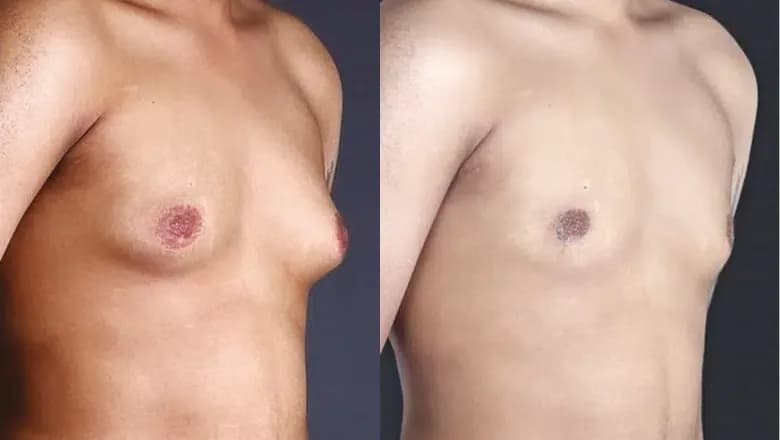

What is Gynecomastia?
- Gynecomastia (sometimes referred to as "man boobs") is a relatively common condition where a boy's or man's breast tissue is larger than normal. The spectrum of the condition could extend from just a small amount of extra tissue around the nipple to more prominent female-like breasts. At Roop Clinique, we understand that gynecomastia can significantly impact self-confidence and quality of life, affecting over 50% of men at some point in their lives.
- Understanding the Condition: Gynecomastia results from an imbalance in the hormonal environment in the body, with a relative excess of estrogens compared to androgens. As a result, the breast tissue under the nipple starts to grow and this is accompanied by deposition of fat around it. The condition can occur at any age but is most common during three life stages: in newborns (due to maternal estrogen exposure), during puberty (affecting more than half of adolescent males due to hormonal fluctuations), and in men over 50 (due to decreased testosterone production and certain medications). The effect of this estrogen excess can happen in a newborn baby, teenage boys around puberty, or even older men in their 40s and 50s.
- Causes and Risk Factors: Gynecomastia develops when there is an increase in estrogen relative to testosterone. This hormonal imbalance can result from natural physiological changes, certain medical conditions (such as hyperthyroidism, kidney disease, liver disease, hypogonadism, or hormone-producing tumors), medications (including certain heart medications, anti-androgens, antibiotics, ulcer medications, and chemotherapy drugs), or substance use (including marijuana, heroin, amphetamines, and anabolic steroid misuse). Genetic factors, old age, obesity, some commonly used medications, chronic alcohol abuse, drug addiction, and certain diseases like chronic liver failure are additional causes. Understanding the underlying cause is essential for determining the most appropriate treatment approach.
- Gynecomastia vs Pseudogynecomastia: It is important to distinguish between true gynecomastia (glandular tissue enlargement) and pseudogynecomastia (fat accumulation). True gynecomastia involves actual breast gland enlargement and feels like a firm, rubbery disc of tissue beneath the nipple. Unlike pseudogynecomastia, which is caused by excess fat accumulation (often due to obesity), true gynecomastia requires different treatment approaches. While gynecomastia itself is not physically harmful, it can cause significant psychological distress, affecting body image and self-esteem.
Treatment Options & Medical Management
Treatment Approaches at Roop Clinique: Treatment for gynecomastia depends on the underlying cause, severity, duration, and individual patient factors. Our comprehensive approach begins with identifying and addressing any underlying medical conditions or medications that may be contributing to the condition. In most cases of peri-pubertal gynecomastia, observation and reassurance are the mainstay of treatment. For many adolescents and some adults, gynecomastia resolves naturally within six months to two years as hormones rebalance. However, for persistent cases or when gynecomastia causes significant distress, active intervention may be recommended.
Medical Management: When gynecomastia is caused by hormonal imbalances or underlying medical conditions, addressing the root cause is the first step. This may involve treating hyperthyroidism, adjusting medications known to cause gynecomastia, or managing hypogonadism with testosterone replacement therapy. In some cases, medications that block estrogen receptors or reduce estrogen production may be prescribed (pharmacological treatment), though these are most effective when started early in the course of the condition. Our endocrinology specialists work closely with patients to optimize hormonal balance and overall health.
Lifestyle Modifications: For cases of pseudogynecomastia where excess fat is the primary concern, weight loss through diet and exercise can significantly reduce breast size. Our team provides comprehensive guidance on nutrition and exercise programs tailored to individual needs. However, it is important to note that exercise alone will not resolve true gynecomastia caused by glandular tissue enlargement, as this tissue does not respond to weight loss or chest exercises. Living with gynecomastia does not affect any other aspect of a person's life, except for the cosmetic appearance that most people are uncomfortable or embarrassed about.
Surgical Treatment: Surgery is recommended in carefully selected cases when the condition causes significant psychological distress or does not respond to conservative management. The condition can be treated permanently only by surgery, performed under local anesthesia with sedation or general anesthesia. For persistent gynecomastia that causes significant psychological distress, surgical treatment (male breast reduction) offers an effective and permanent solution. The procedure typically involves liposuction to remove excess fat combined with surgical excision to remove glandular tissue. The specific technique used depends on the amount of tissue to be removed, skin elasticity, and individual anatomy.
Key Details
Am I the Right Candidate?
Although the incidence of patients visiting doctors with gynecomastia appears to be on the rise, surgery is not indicated in all cases, since the minor variety of the condition is extremely common. The classical complaint is that it causes social stigma, not allowing one to wear a fitting t-shirt or to take off one's shirt in public. In the younger patient, especially those in their teens, this may result in severe psychological issues because of being teased or tormented by peers.
Good candidates for gynecomastia surgery are generally healthy males with realistic expectations who have persistent breast enlargement that does not respond to medical treatment or lifestyle changes. The condition should be stable for at least one to two years (especially important for adolescents to ensure growth is complete). Candidates should be at or near their ideal body weight, be non-smokers or willing to quit, and not have medical conditions that impair healing. In cases where gynecomastia causes great mental discomfort, you need to consult a qualified plastic/cosmetic surgeon.
Diagnostic Evaluation & Treatment Planning
Comprehensive Assessment: When you visit a plastic surgeon, the diagnosis is quickly apparent on physical examination. In most cases of pubertal gynecomastia, which is the commonest, the history and physical examination is adequate for a complete diagnosis. During your initial consultation, our specialists conduct a thorough medical history review, physical examination, and assessment of your concerns and goals. We evaluate the size and consistency of breast tissue, check for asymmetry, and distinguish between glandular tissue and fat.
Advanced Diagnostics: In certain cases, after examining other areas of the body such as the external genitalia, the surgeon may ask for some specialized blood tests to confirm the cause. Blood tests may be ordered to check hormone levels (testosterone, estrogen, thyroid hormones, liver and kidney function) and rule out underlying medical conditions. Imaging studies such as mammography or ultrasound may be recommended in certain cases to further characterize the breast tissue and develop a customized treatment plan.
Surgical Procedure Details
Surgical Technique: The procedure may be performed by liposuction or open reduction, or most commonly a combination of both. This depends on whether the condition is predominantly fatty, predominantly glandular, or a combination of both. Liposuction is always performed as part of the surgical treatment to remove the excess breast fat and shred the gland tissue. If the gland tissue is significant or it is too firm/hard, then it needs to be removed by open excision. Failing to do this completely can make the condition recur.
Procedure Details: The surgery is performed under general anesthesia or local anesthesia with sedation and typically takes one to two hours. Small incisions are made at inconspicuous locations (usually around the areola or in natural chest creases). Advanced techniques ensure minimal scarring and natural chest contours. The excess loose skin after the surgery is usually allowed to shrink as much as possible using compression garment support. At the end of 3 months, if there is still some residual loose skin, it may either be ignored or if the patient wishes, only the excess skin can be tightened by another procedure. Rarely in the most severe cases where the growth is like a female breast, the surgery may need to be similar to that done for a breast reduction in females with more visible scars.
Recovery & Post-Operative Care
Immediate Recovery: You may be allowed to go home the same day or at the most need to stay overnight in the hospital depending on the amount of fat and breast gland removed. Your chest area may be bruised and swollen for a couple of weeks, but this will gradually reduce. Most patients experience mild to moderate discomfort, swelling, and bruising for the first few days after surgery, managed effectively with prescribed pain medication. Significant pain is usually felt for only 24-48 hours and can be taken care of well with pain-killers.
Recovery Guidelines: You will be required to wear a supporting compression garment 24/7 for up to six weeks after surgery to support and compress your chest. Most patients can return to work within 5-7 days after their gynecomastia surgery. You will be instructed to avoid any heavy lifting or strenuous activity for up to six weeks after surgery and not drive until you feel comfortable wearing a seatbelt. Surgical drains, if placed, are typically removed within a few days.
Long-Term Results & Expectations: The benefits of gynecomastia surgery are that when properly done, the result is permanent. Male breast reduction results are meant to be permanent – the excess fat, glandular tissue and skin, once removed are gone for good. Final results become visible as swelling subsides over several weeks to months. By 3-6 months after surgery, the scars are practically invisible in most cases. It will restore a naturally masculine appearance to your chest. With a firmer, flatter, and better-shaped chest, patients feel more confident with vastly increased self-esteem. However, it's important to maintain a healthy lifestyle. Significant weight gain, steroid abuse, or certain medical conditions which cause hormonal imbalances could result in a recurrence.
Potential Risks & Complications
Gynecomastia surgery is typically a short procedure with a quick recovery and virtually invisible scars. Like any surgical procedure, it carries some risks, including bleeding, infection, scarring, asymmetry, changes in nipple or breast sensation, and adverse reactions to anesthesia. Sometimes contour irregularities may be visible after the swelling subsides. Rarely wound infection, seroma (collection of fluid under the skin), or hematoma may occur.
However, these complications are rare when the procedure is performed by experienced surgeons in accredited facilities. At Roop Clinique, we use advanced techniques to minimize risks and ensure optimal outcomes. Your surgeon will give you antibiotics for some days to avoid infection. Small irregularities can be taken care of secondarily after a few months under local anesthesia. Most patients experience a reduction or loss of sensation in the treated areas but this is almost always temporary. An attempt is always made to limit scars, place them in natural folds or around the periphery of the areola or directly through the nipple.
Frequently Asked Questions
1. Is gynecomastia treatment permanent?
2. Will gynecomastia go away on its own?
3. What are the risks of gynecomastia surgery?
4. How much does gynecomastia treatment cost?
5. Am I a good candidate for gynecomastia surgery?
6. Will there be visible scars after surgery?
7. Can gynecomastia be prevented?
8. What kind of results can be expected?
Source: Indian Association Of Aesthetic Plastic Surgeons